Health and Safety Policy for Uxbridge Cleaners
 Uxbridge Cleaners is committed to maintaining a safe, healthy, and well-managed working environment for employees, clients, visitors, and contractors. This health and safety policy sets out the principles, responsibilities, and practices that support safe cleaning operations in every setting. We recognise that professional cleaning involves a range of activities, including handling equipment, using chemicals, working at height, and moving between different environments. For that reason, our approach focuses on prevention, awareness, and consistent control measures.
Our aim is to ensure that every task is carried out with care and that risks are identified before work begins. We expect all staff to act responsibly, follow instructions, and use approved equipment and products correctly. Safety is part of quality service, and it is embedded into daily working practices rather than treated as a separate concern. This applies to office cleaning, domestic cleaning, specialist cleaning, and any other cleaning services delivered under the Uxbridge Cleaners name.
We believe that a strong safety culture protects people and improves service standards. Therefore, all workers are expected to understand the hazards relevant to their role, report concerns promptly, and cooperate with safety procedures at all times.
Responsibilities and Safe Working Practices
The management team is responsible for providing safe systems of work, suitable training, and appropriate supervision. This includes ensuring that equipment is maintained in good condition, that cleaning products are stored safely, and that risk assessments are reviewed when tasks or conditions change. Managers must also make sure that staff have access to personal protective equipment where needed and that any incidents are reviewed to prevent recurrence.
Employees and operatives share responsibility for working safely. They must use equipment only for its intended purpose, keep work areas tidy, and avoid unsafe shortcuts. If a surface is wet, a cable is exposed, or a cleaning task creates a temporary hazard, appropriate controls such as warning signs, barriers, or alternative methods must be used. In all situations, the cleaner health and safety approach depends on attention to detail and clear communication.
 Training is provided to support safe practice, including manual handling, chemical awareness, equipment use, and emergency procedures. New starters receive induction information before beginning work, while existing staff receive refresher instruction when needed. No one should carry out a task if they are unsure about the risks or the correct method.
Risk Control and Equipment Safety
Cleaning work often involves repetitive movements, lifting, pushing, carrying, and working in awkward positions. To reduce the risk of strain or injury, employees should use safe lifting techniques, split heavy loads into smaller amounts where possible, and request assistance for bulky or difficult items. Where powered equipment is used, cords, plugs, and attachments must be checked before use, and any faults reported immediately. Unsafe equipment must not be used until it has been inspected and made safe.
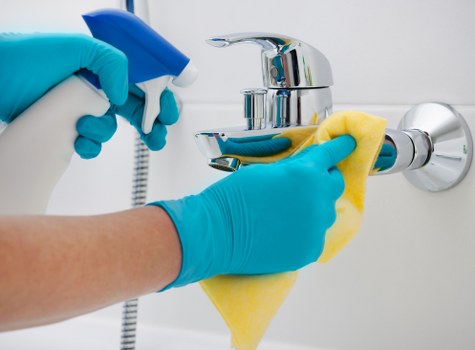
Cleaning chemicals must always be handled in line with manufacturer instructions and internal procedures. Products should be labelled correctly, mixed only when permitted, and stored in secure locations away from unauthorised access. Staff must not combine substances unless they have been specifically trained to do so, as this may create harmful fumes or reactions. Protective gloves, eye protection, or other PPE should be worn whenever the task requires it.
 Good housekeeping is essential to prevent slips, trips, and falls. Spills should be dealt with promptly, equipment should be stored neatly, and passageways should remain clear wherever possible. If work is being carried out in an occupied building, the team should take extra care to minimise disruption and reduce the chance of accidents involving clients, residents, or other workers.
Incident Reporting and Emergency Response
All accidents, near misses, unsafe conditions, and work-related health concerns must be reported as soon as possible. Prompt reporting helps identify patterns and allows corrective action to be taken quickly. Minor injuries may still indicate a broader issue, such as poor equipment handling, inadequate layout, or unsafe product storage. Recording concerns accurately is an important part of maintaining a reliable Uxbridge cleaners health and safety policy.
In an emergency, staff should remain calm, follow local procedures, and prioritise the safety of people in the immediate area. This may include isolating equipment, leaving the area, contacting responsible personnel, or seeking first aid where appropriate. Employees should be familiar with the basic response expected in case of fire, chemical exposure, sharp-object injury, or other serious incident. Emergency exits must never be blocked, and evacuation instructions should always be followed.
Workplaces can change from day to day, so risk control must remain flexible. If conditions appear unsafe, staff should pause the task and raise the issue before continuing. This cautious approach reflects the professional standards expected from cleaning services that place wellbeing and reliability at the centre of their work.
Health, Wellbeing, and Ongoing Improvement
 We also recognise the importance of health and wellbeing in sustaining safe performance over time. Fatigue, stress, poor posture, and dehydration can all affect concentration and increase the likelihood of incidents. Workers are encouraged to take reasonable breaks, stay hydrated, and speak up if they feel unable to complete a task safely. Managers should consider workload, scheduling, and task rotation where practical to reduce unnecessary pressure.
Regular review of procedures helps ensure that our standards remain effective. Feedback from inspections, incident reports, and operational experience is used to improve training, update control measures, and strengthen communication. This continuous improvement process helps maintain a safer workplace and supports the delivery of dependable cleaner health and safety practices across all assignments.
Uxbridge Cleaners expects every member of the team to contribute to a positive safety culture. By working carefully, using equipment correctly, and respecting procedures, we can protect ourselves and those around us while delivering a professional service.
Policy Commitment
 This policy applies to all cleaning activities undertaken by Uxbridge Cleaners and should be read alongside task-specific instructions, training records, and site procedures. It reflects our commitment to preventing harm, meeting professional standards, and promoting responsible working habits. Everyone involved in our operations is expected to support this commitment and take practical steps to keep work safe, efficient, and well controlled.